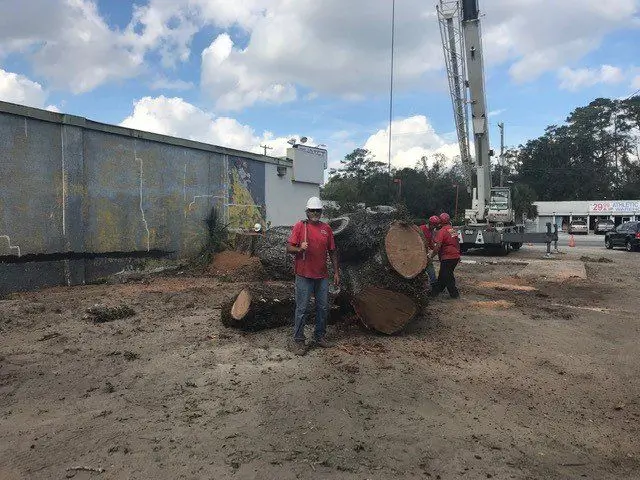
If you have asked three companies for a quote and gotten three very different numbers, you are not alone. Tree removal cost can vary widely, and understanding what drives the price helps you tell a fair quote from a lowball or a rip-off. This guide is written for Jacksonville homeowners who want to know what to expect before they call. Drawing on more than 40 years removing trees across Northeast Florida, we will explain the factors that shape your price, why the cheapest bid is often the most expensive mistake, local permit rules to know, and how to get an accurate estimate for your specific tree.
Key Takeaways
- The biggest driver of tree removal cost is size, meaning height, trunk diameter, and canopy spread.
- Location and access matter enormously; a tree over your house costs far more than one in an open field.
- Species, health, and hazards all affect the difficulty and therefore the price.
- Jacksonville and surrounding cities have tree protection rules, and some removals require a permit.
- The cheapest quote often comes from uninsured operators, which can leave you liable for accidents and damage.
Why Tree Removal Prices Vary So Much
There is no flat rate for tree removal because no two jobs are alike. A small dead crepe myrtle in the middle of an open yard is a quick job. A 70-foot laurel oak leaning over a two-story house next to power lines is a complex, high-risk operation requiring rigging, careful planning, and sometimes a crane. The price reflects the labor, equipment, risk, and time each job demands.
Understanding the individual factors below will help you see why quotes differ and where your tree falls on the spectrum.
The Main Factors That Determine Tree Removal Cost
1. Tree size
Size is the single biggest factor. Removal difficulty rises steeply with height and trunk diameter:
- Small trees (under about 25 feet) are the quickest and least expensive to remove.
- Medium trees (roughly 25 to 50 feet) require more labor and often sectional dismantling.
- Large trees (50 to 80-plus feet), common among Jacksonville’s oaks and pines, are the most expensive because they must be taken down piece by piece with rigging.
A taller tree does not just have more wood; it has more risk and requires more skilled climbing or bucket work.
2. Location and accessibility
Where the tree stands can matter as much as its size. Consider these access questions:
- Is the tree in an open area, or hemmed in by a house, fence, pool, and neighboring structures?
- Can equipment like a bucket truck or chipper reach the tree, or must everything be carried by hand?
- Are there power lines nearby that require utility coordination?
A tree that can be dropped safely in one piece in an open yard is far cheaper than an identical tree that must be dismantled limb by limb over a roof.
3. Species and condition
Hardwoods like oak are dense and heavy, taking more time and blade wear than softer woods. A tree’s health also matters: a dead, decayed, or storm-damaged tree can be more dangerous to remove because the wood is unpredictable and may fail during the work, which can raise the price rather than lower it.
4. Lean and hazards
A tree leaning toward a structure, tangled in power lines, or with a split trunk requires extra rigging and planning. Emergency and hazardous removals generally cost more than routine ones because of the added risk and specialized technique involved. For urgent situations, our emergency tree services team is available 24/7.
5. Stump grinding and cleanup
The base price to fell a tree usually does not include the stump or full debris haul-off. Ask what is included. Common add-ons are:
- Stump grinding, priced separately (see our stump grinding service).
- Log and debris removal versus leaving wood on site.
- Chipping brush into mulch.
Cost factors at a glance
| Factor | Lower cost | Higher cost |
|---|---|---|
| Size | Under 25 ft | 50-80+ ft |
| Access | Open yard | Over house, tight space |
| Power lines | None nearby | Utility coordination needed |
| Condition | Healthy, stable | Dead, decayed, leaning |
| Wood type | Soft, light | Dense hardwood like oak |
| Extras | Fell only | Plus stump grinding and haul-off |
Do You Need a Permit to Remove a Tree in Jacksonville?
This is a step many homeowners overlook. Jacksonville and its surrounding communities have tree protection ordinances designed to preserve the region’s canopy, and some tree removals require a permit or are regulated based on the tree’s size and species.
The City of Jacksonville regulates the removal of certain protected and heritage trees, and rules can differ in neighboring jurisdictions like St. Johns and Nassau counties. Before removing a large or established tree, it is worth confirming the local requirements, because removing a protected tree without authorization can result in fines or mitigation costs. The Florida Forest Service and your local municipal government are good starting points, and a reputable local tree company will be familiar with the applicable rules.
Note that Florida law does provide homeowners some latitude to remove trees that a certified arborist or licensed landscape architect documents as a danger, so a professional hazard assessment can be valuable both for safety and for compliance.
Why the Cheapest Quote Is Often the Most Expensive
When bids vary widely, the lowest one deserves scrutiny. The most common reason a quote is dramatically cheaper is that the operator carries no insurance.
Tree removal is genuinely dangerous work. The Tree Care Industry Association stresses that consumers should verify a company carries both liability insurance and workers’ compensation before hiring. Here is why it matters:
- If an uninsured worker is injured on your property, you could be held liable.
- If an uninsured crew drops a limb on your roof, you may have no recourse for the damage.
- Uninsured operators skip the cost of insurance, which is exactly why their price looks lower.
Before you hire anyone, ask for proof of insurance, confirm the crew is trained, and check reviews. You can learn about our credentials and history on our about page.
Questions to ask before you hire
- Are you licensed and insured, and can I see a certificate?
- Does the quote include stump grinding and debris removal?
- Will you handle any required permits?
- Is there a certified arborist involved in the assessment?
- Can you provide local references or reviews?
How to Get an Accurate Tree Removal Estimate
Because so many variables affect the price, no one can give you a truly accurate number over the phone without details. The best approach is an on-site estimate, where a professional can see the tree’s size, location, condition, and access, and identify any permit needs. A written estimate that itemizes the work protects you from surprise charges later.
Get the removal itself, stump grinding, and cleanup broken out separately so you can compare quotes fairly and decide which add-ons you want. Our tree removal team provides free, no-obligation estimates across Jacksonville.
FAQ
What is the biggest factor in tree removal cost?
Size is the biggest factor. A tree’s height, trunk diameter, and canopy spread largely determine how much labor, equipment, and rigging the job requires. Large trees over 50 feet, common among Jacksonville’s oaks and pines, cost the most because they must be dismantled in sections.
Do I need a permit to remove a tree in Jacksonville?
Sometimes. Jacksonville and surrounding areas have tree protection ordinances, and certain protected or heritage trees require a permit before removal. Rules differ by jurisdiction. Removing a protected tree without authorization can lead to fines, so confirm local requirements or work with a company familiar with them.
Why is one tree removal quote so much cheaper than the others?
The most common reason is a lack of insurance. Uninsured operators skip the cost of liability and workers’ compensation coverage, which lowers their price but transfers the risk to you. If an accident or property damage occurs, you could be held liable. Always verify insurance before hiring.
Is stump removal included in tree removal cost?
Usually not. The base price to cut down a tree typically covers felling and sometimes debris removal, but stump grinding is generally a separate charge. Ask each company to itemize the felling, stump grinding, and cleanup so you can compare quotes accurately.
How can I get an accurate tree removal estimate?
Request a free on-site estimate. A professional can assess the tree’s size, condition, location, and access, plus any permit requirements, which cannot be judged accurately over the phone. Ask for a written, itemized quote that separates removal, stump grinding, and debris haul-off.
Get a Fair, Transparent Quote
Tree removal cost in Jacksonville comes down to size, location, condition, and the extras you choose, plus local permit rules you should not ignore. The lowest bid is often the riskiest, since it frequently signals an uninsured operator who could leave you holding the bill for an accident. The smart move is an on-site, itemized estimate from a licensed, insured, and experienced company.
Custom Tree Surgeons has removed trees safely across Northeast Florida for more than 40 years, fully licensed and insured. For a free, no-obligation estimate on your tree, call (904) 944-9954 or request a free tree care estimate today.