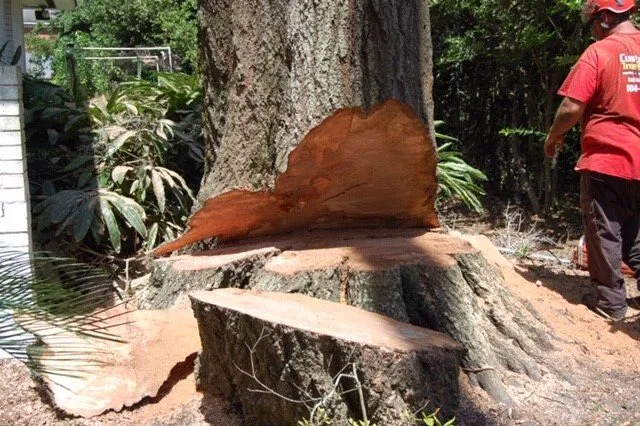
You had a tree taken down, and now an ugly stump is sitting in the middle of your yard. The next decision, stump grinding vs stump removal, is one of the most common questions Jacksonville homeowners ask, and the right answer depends on your budget, your landscaping plans, and what you plan to do with the space. This guide is written for Northeast Florida property owners weighing their options. Drawing on 35-plus years of local experience, we will break down how each method works, what each costs, the pros and cons, and how to choose the option that fits your yard.
Key Takeaways
- Stump grinding shaves the stump into chips, typically 4 to 12 inches below grade, and leaves the roots to decompose naturally. It is faster and cheaper.
- Stump removal extracts the entire stump and root system, leaving a large hole but a completely clear site.
- Grinding usually costs less and causes far less yard disruption; full removal costs more and is more invasive.
- For most homeowners, stump grinding is the practical choice, unless you are replanting in the exact spot or doing major construction.
- Removing the stump helps prevent pests, regrowth, and tripping hazards either way.
What Is Stump Grinding?
Stump grinding uses a machine with a rotating, carbide-toothed wheel to chip a stump down into small pieces of wood mulch. The grinder works its way across the stump and grinds it below the soil surface, usually 4 to 12 inches deep, sometimes deeper if you plan to replant or lay sod.
What grinding does not do is remove the underground root system. The roots are left in place to decompose naturally over the following years, which in Florida’s warm, humid climate happens relatively quickly.
The grinding process, step by step
- The crew clears rocks and debris around the stump to protect the equipment.
- The grinder reduces the stump to mulch, working from the top down and side to side.
- The resulting wood chips fill the hole, or are hauled away if you prefer.
- The area is raked level and ready for soil and grass.
Grinding is fast. A typical residential stump can be ground in under an hour, and cleanup is minimal. Our stump grinding service handles everything from a single stump to a full lot.
What Is Stump Removal?
Stump removal is exactly what it sounds like: the entire stump, plus the major root ball, is pulled out of the ground. This usually requires heavy equipment such as an excavator or a stump puller, because mature tree roots can extend well beyond the trunk and grip the soil firmly.
The result is a completely clear site with no wood left behind. The trade-off is a large hole, often several feet across and deep, plus significant soil disturbance that you will need to backfill and regrade.
When full removal makes sense
- You plan to build a structure, pour concrete, or install a pool where the tree stood.
- You want to plant a new tree in the exact same location.
- The root system is interfering with foundations, pipes, or hardscaping.
- You want absolutely no wood left in the ground.
Stump Grinding vs Stump Removal: Side-by-Side
| Factor | Stump grinding | Stump removal |
|---|---|---|
| What is removed | Stump only, to 4-12 in. deep | Entire stump and root ball |
| Yard disruption | Minimal | Significant (large hole) |
| Speed | Under an hour for most stumps | Longer, needs heavy equipment |
| Relative cost | Lower | Higher |
| Cleanup | Wood chips, raked level | Large hole to backfill and regrade |
| Roots left behind | Yes, decompose over time | No |
| Best for | Most yards, aesthetics, replanting nearby | Construction, replanting in same spot |
What about cost?
Pricing varies with stump diameter, wood species, and access, but the general rule holds: grinding costs less than full removal because it is faster and uses smaller equipment. Many companies price grinding per inch of stump diameter, while full extraction is priced by the labor and machinery involved. For an accurate number on your specific stump, a free estimate is the best starting point.
Why You Should Not Leave a Stump in the Ground
Some homeowners are tempted to just leave the stump and let nature take its course. In Northeast Florida, that often creates more problems than it solves.
Pests and decay organisms
A decaying stump is an open invitation to termites, carpenter ants, and other wood-boring pests. The University of Florida IFAS Extension notes that dead wood in the landscape can harbor termites, and a stump close to your home puts those pests uncomfortably near your foundation.
Sprouting and regrowth
Many common Jacksonville trees, including some oaks and especially fast-spreading species, can send up new shoots from a living stump or its roots. Grinding the stump and removing the surface roots greatly reduces the chance of unwanted regrowth.
Fungi and safety hazards
Stumps sprout mushrooms and fungal growth in our humid climate, some of which can be harmful to pets. A stump is also a genuine tripping hazard and a nuisance for mowing. Grinding it below grade eliminates both problems.
How to Choose the Right Option
Ask yourself three questions:
- What do you want to do with the space? Planting grass or a garden bed nearby favors grinding. Building, paving, or replanting in the exact spot favors full removal.
- How much disruption can you accept? Grinding leaves a tidy, level surface. Removal leaves a large hole and disturbed soil that needs regrading.
- What is your budget? Grinding is the more economical choice for most situations.
For the large majority of Jacksonville homeowners who simply want the stump gone so they can reclaim their yard, stump grinding is the practical winner. Full removal is worth the extra cost and mess only when you specifically need the roots gone.
A certified arborist can look at your stump, your soil, and your plans and give you a clear recommendation. If the tree is still standing, our tree removal and tree trimming crews can handle the whole job from canopy to stump.
FAQ
Is stump grinding better than stump removal?
For most homeowners, yes. Stump grinding is faster, less expensive, and leaves a level, tidy surface, while stump removal extracts the entire root system but leaves a large hole. Choose full removal only when you plan to build, pave, or replant a tree in the exact same spot.
How deep does stump grinding go?
Stump grinding typically goes 4 to 12 inches below the soil surface. Deeper grinding is possible if you plan to lay sod, plant grass, or replant nearby. The roots are left in the ground to decompose naturally, which happens relatively quickly in Florida’s warm, humid climate.
Will a ground stump grow back?
It is unlikely but possible with certain species that sprout aggressively. Grinding the stump several inches below grade and removing visible surface roots greatly reduces regrowth. If sprouts do appear from remaining roots, they can be treated or removed before they re-establish.
What happens to the hole after stump grinding?
The grinder produces wood chips that can be used to fill the void, then the area is raked level. Over time the chips settle, so you may need to top off with soil before planting grass. Full stump removal, by contrast, leaves a large hole that must be backfilled.
How much does stump grinding cost in Jacksonville?
Cost depends on stump diameter, wood hardness, and access, and it is generally less than full stump removal. Many companies price grinding by the inch of stump diameter. The most accurate way to know is to request a free on-site estimate for your specific stump.
Reclaim Your Yard the Smart Way
When it comes to stump grinding vs stump removal, there is no universal winner, only the right choice for your yard and your goals. Grinding is the fast, affordable, low-disruption option that suits most Jacksonville homeowners, while full removal is best reserved for construction or replanting in the same spot. Either way, getting rid of that stump protects your property from pests, regrowth, and hazards.
Custom Tree Surgeons has helped Northeast Florida homeowners clear stumps for more than 40 years. To find out which option fits your yard and budget, call (904) 944-9954 or request a free tree care estimate today.